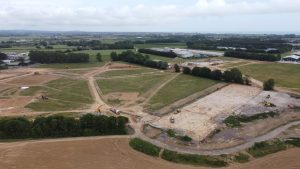

OCL Regeneration was appointed to deliver enabling, remediation and paving works at the historic Ford Airfield in West Sussex, supporting the transformation of the former Second World War airfield into a major new residential development.
The wider scheme, led by Vistry Group, will deliver approximately 1,500 mixed-tenure homes alongside new community infrastructure and public facilities including new access and spine roads. A key aspect of the preparatory works involved the removal and treatment of the existing runway structure, originally constructed in the early 20th century and later used during World War II operations.
The runway comprised a 250mm thick concrete slab laid over an asphalt base containing hazardous materials. Due to the presence of contaminated asphalt waste, the project required specialist handling, treatment and reprocessing methods to ensure compliance with Environment Agency regulations. OCL’s solution not only complied with this requirement but provided a cost effective solution for material reuse.
OCL was selected based on our expertise in circular construction, in-situ and ex-situ recycling methodologies and hazardous
material management. Our role focused on transforming site-derived waste into engineered construction materials produced and reused directly within the development, significantly reducing waste and the need for imported aggregates.

OCL’s In-situ Solution
OCL implemented a fully integrated on-site recycling and material recovery strategy designed to maximise the reuse of site-won materials while minimising environmental impact and haulage.
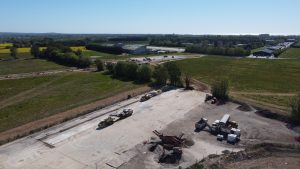
The first phase of the project involved stabilising a 6,000m² temporary compound area using in-situ treatment techniques. This created a suitable working platform to support mobile plant operations, vehicle movements and material storage throughout the remediation programme.
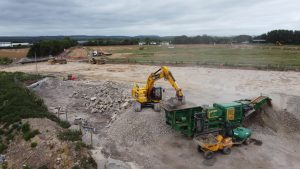
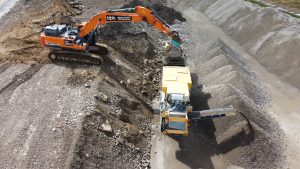
Following compound preparation, OCL commenced the removal of the existing runway pavement. Sections of the runway were milled and screened before being processed through OCL’s mobile recycling operation. The recovered materials were blended with cement and water to produce Cement Bound Granular Material (CBGM) a high-performance recycled paving material that is a cost-effective sustainable solution for heavy-duty construction applications.
This recycled CBGM was immediately reused on-site to construct the compound surface and infrastructure working areas, demonstrating a true circular construction process.
By carrying out crushing, screening, mixing and material manufacture on-site, OCL eliminated significant volumes of waste transport while creating valuable secondary construction products from what would traditionally have been classified as waste.
OCL’s Solution
The Ford Airfield project demonstrates OCL Regeneration’s ability to deliver large-scale circular construction solutions within technically complex environments.
Through the use of specialist in-situ recycling techniques, OCL successfully diverted substantial quantities of runway materials from disposal while producing compliant construction products for immediate reuse within the development. This approach significantly reduced the demand for virgin quarried materials and minimised associated transportation movements.
The project also showcased OCL’s expertise in the safe handling and compliant treatment of hazardous asphalt materials, enabling the redevelopment of an historically significant brownfield site in line with modern environmental standards.
In addition to delivering measurable sustainability benefits, the approach generated programme and cost efficiencies for the wider development by reducing import/export logistics and enabling continuous material availability on-site.
The Ford Airfield scheme further reinforces OCL Regeneration’s position as a specialist contractor in circular construction, sustainable remediation and low-carbon infrastructure delivery, supporting the wider construction industry’s transition towards more resource-efficient development practices.