
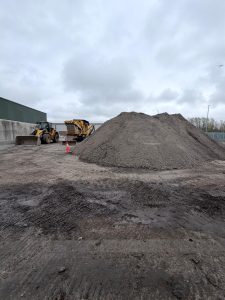
OCL Regeneration was appointed to develop a practical and sustainable solution for challenging mixed waste stockpiles for West Sussex County Council (WSCC) and VolkerHighways at the Drayton Road Depot, Chichester. The site contained an estimated 4,000 tonnes of mixed and contaminated materials including asphalt, aggregates, concrete, soils, organics, sweepings, oils and other contaminants. This posed a significant environmental compliance issue which threatened to result in a costly disposal liability. The area was uneven, in very poor condition and had significant areas of standing water following periods of rain.
At the outset, there was no clear remediation solution or available revenue budget to facilitate removal of the stockpiled waste. Traditional disposal of the mixed hazardous and non-hazardous materials to landfill was estimated to cost in excess of £250,000.
OCL proposed an on-site circular economy solution to transform the material into a reusable pavement surfacing product for use on site to upgrade the depot and expand the operational footprint of the site. This option would lead to an improvement in the asset and offered a 40% cost saving against disposal with no enhancement to the site. By classifying the works as a depot improvement scheme rather than waste disposal, the client was also able to utilise capital funding rather than operational budget, thereby avoiding additional pressure on services.
The Challenge
The depot had accumulated substantial mixed waste stockpiles that were occupying valuable operational space and limiting the efficiency of the yard. Due to the varied and contaminated nature of the material, disposal would have required segregation and hazardous waste classification together with costly haulage and landfill charges.
Valuable asphalt, aggregates, concrete and soils that could potentially be reused would also have been lost through disposal. In addition, the land beneath the stockpile remained unsurfaced, underutilised and unavailable for depot operations.
The client was also facing an ongoing environmental compliance issue, with legacy contaminated material requiring a fully compliant resolution under the appropriate permitting controls.
OCL’s Solution
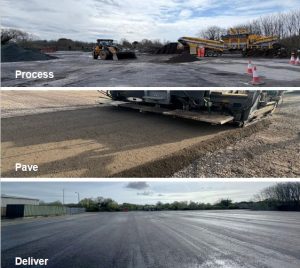
Using OCL’s specialist crushing, screening, blending and stabilisation process the waste materials were recovered and engineered into compliant, reusable construction products. This enabled the existing stockpile to become a valuable resource rather than simply construction waste.
All processing was undertaken on site using mobile equipment supported by a high-capacity, on-site mixer. This ensured efficient, sustainable and compliant delivery under OCL’s Environmental Permit.
Phase 1 – Recovery & Stabilisation
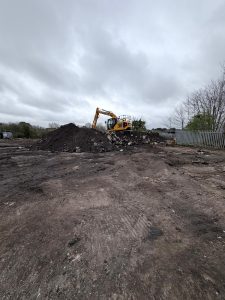
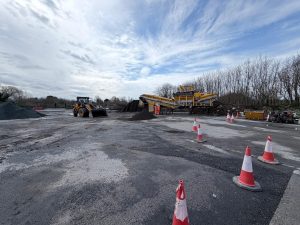
OCL mobilised specialist plant to process the mixed stockpiles. The material was mechanically screened and cleaned to remove oversized waste and unsuitable inclusions such as wood, organics, debris and materials that could not be incorporated into the final construction scheme.
Crushing, screening and stabilisation technology was used to recover reusable aggregate fractions and, where necessary, the material quality was improved through the use of proprietary mix designs in readiness for Phase 2.
This phase converted a mixed waste stockpile into valuable reusable construction materials with minimal residual waste requiring off-site disposal. It also allowed OCL to quantify the volume of material recovered for the planned paving operation to improve the general condition, operational efficiency, safety and size of the WSCC Highways asset.
Phase 2 – Paving Materials Production
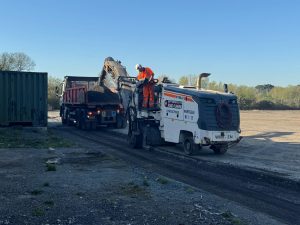
Recovered aggregate fractions from asphalt planings, crushed concrete and selected finer materials were blended through OCL’s continuous mixing equipment to manufacture Hydraulicly Bound Material (HBM), compliant with the MCHW CC203 and suitable for depot infrastructure use.
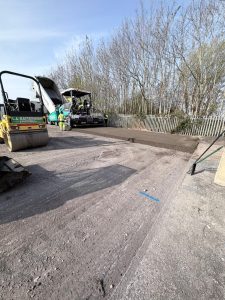
The recycled HBM was laid using a paver in layers of up to 300mm where required, compacted and finished with a sealed bituminous surface course to create a durable new hardstanding area capable of supporting highways depot operations and improving drainage across the entire area.
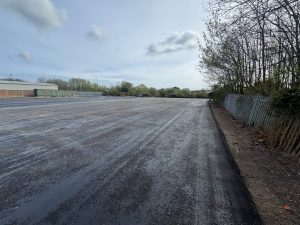
This process not only removed the waste stockpile but also improved the land by creating a long-term engineered surface for operational use. Historic contaminants were encapsulated within the engineered structure, rendering the final material inert and compliant.
Land Transformation & Site Benefits
Before Works
• Waste stockpiles occupying usable depot space
• Poor drainage and unmade ground beneath stockpiles
• Environmental compliance concerns and disposal liability
• Restricted vehicle movement and storage capacity
After Works
• Stockpiles removed and waste material remediated
• Serviceable hardstanding created, increased footprint
• Improved vehicle access and material storage areas
• Historic contaminants safely encapsulated
• Long-term reduction in waste and maintenance liabilities
Commercial & Environmental
By adopting OCL’s proposal the client delivered the project at 60% of the projected landfill disposal cost, thereby achieving substantial overall savings.
WSCC gained a valuable surfaced depot asset rather than paying solely for waste removal. By reclassifying the project as a depot improvement scheme, capital funding could be utilised in place of Highways budget expenditure.
By recovering waste the project reduced:
• Landfill dependency and virgin aggregate demand
• Transport emissions from haulage
• Embodied carbon associated with new materials
This is a clear example of circular economy delivery within highways infrastructure – driving down cost and carbon. The WSCC project highlights how OCL Regeneration’s service can transform difficult mixed wastes into valuable construction materials while materially improving land use. Instead of incurring heavy disposal costs, the client secured a lower-cost solution, reclaimed valuable depot space and gained a durable new operational base for future use.
The Review
‘OCL’s specialist operations team successfully transformed what was initially an environmental liability into a high-quality, functional space within one of our strategic Highways depots. By moving away from traditional waste disposal methods and instead recycling the material as part of a development opportunity, West Sussex County Council (WSCC) was able to access an alternative funding stream, thereby avoiding additional pressure on the main contract delivery budget.
The end result significantly exceeded expectations, both in terms of the original waste challenge and the operational space created. The quality of the completed facility is such that it is now far too valuable to be considered merely a storage area. We would strongly recommend OCL’s methodology and approach to addressing complex environmental and operational challenges.’
NK – Project Manager, VolkerHighways