Growth of OCL Regeneration accommodates demand for circular products in road construction projects
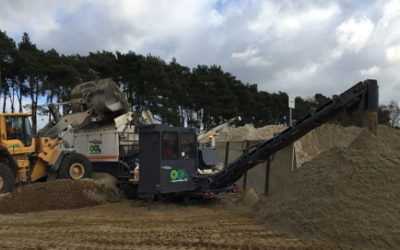
SUSTAINABLE road-building solutions providers OCL Regeneration have significantly expanded the size of their regional recycling hub and mobile satellite facilities network to prioritize circular construction, since being acquired by Holcim UK in 2023.
Founded in 2006, OCL held six depots – four permanent facilities in Medway, Hampshire, Bristol and Lincolnshire, and two regular satellite sites in Northumberland and Oxfordshire – prior to becoming part of Holcim.
They have now expanded this to include a site at Croft in Leicestershire, and are set to add sites in Birmingham and Stoke later in 2026, through their collaboration with Holcim’s recycling teams.
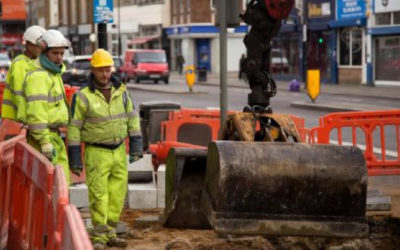
This expansion of operations allows Holcim’s customers across the UK to more easily access OCL’s expertise in full road reconstructions, trench reinstatement, and footway repairs, delivering smarter, lower-carbon roads that avoid costs, cut carbon, and keep valuable materials in use.
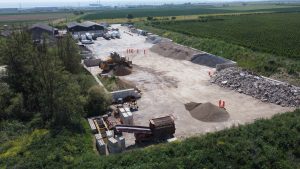
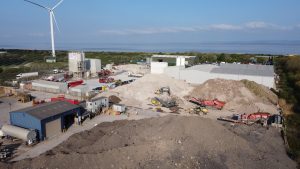
Since being acquired by Holcim UK in 2023, OCL Regeneration have significantly expanded the size of their regional recycling hub and mobile satellite facilities network
Recycling centre networks significantly reduce carbon emissions, with reprocessed waste producing up to 50% fewer CO2e outputs than traditional asphalt. With the construction industry responsible for approximately 38% of global carbon emissions, the development of these facilities is essential to reach the UK Government’s 2050 net-zero target. The expansion also reflects the rising demand for circular products in construction.
Holcim UK’s recent Circularity Survey revealed that 97% of respondents believe that embracing circularity at their organization is important, compared with 79% in 2024.
Neil Leake, national technical manager at Holcim, said: ‘Our ambition is to make sustainable construction a reality, and through the utilization of circular products, such as those provided by OCL, we can conserve finite materials and minimize waste. The expansion of these facilities is making the delivery of smarter, lower-carbon roads possible for customers right across the country.’
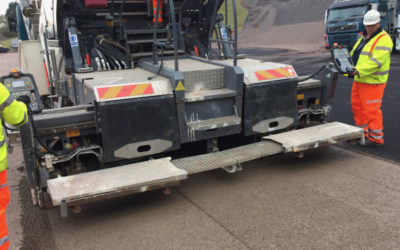
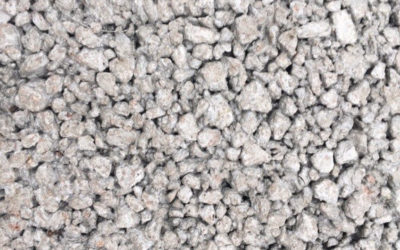
Key to this is Foamix, a cold recycled bound material (CRBM) that replaces asphalt base and binder and is an approved method of reusing asphalt waste containing coal tar (AWCCT), avoiding the need for costly disposal into landfill. Foamix is made up of 94% recycled materials, can be laid by hand or through standard paving equipment, and is a driving force in achieving low-carbon road infrastructure.
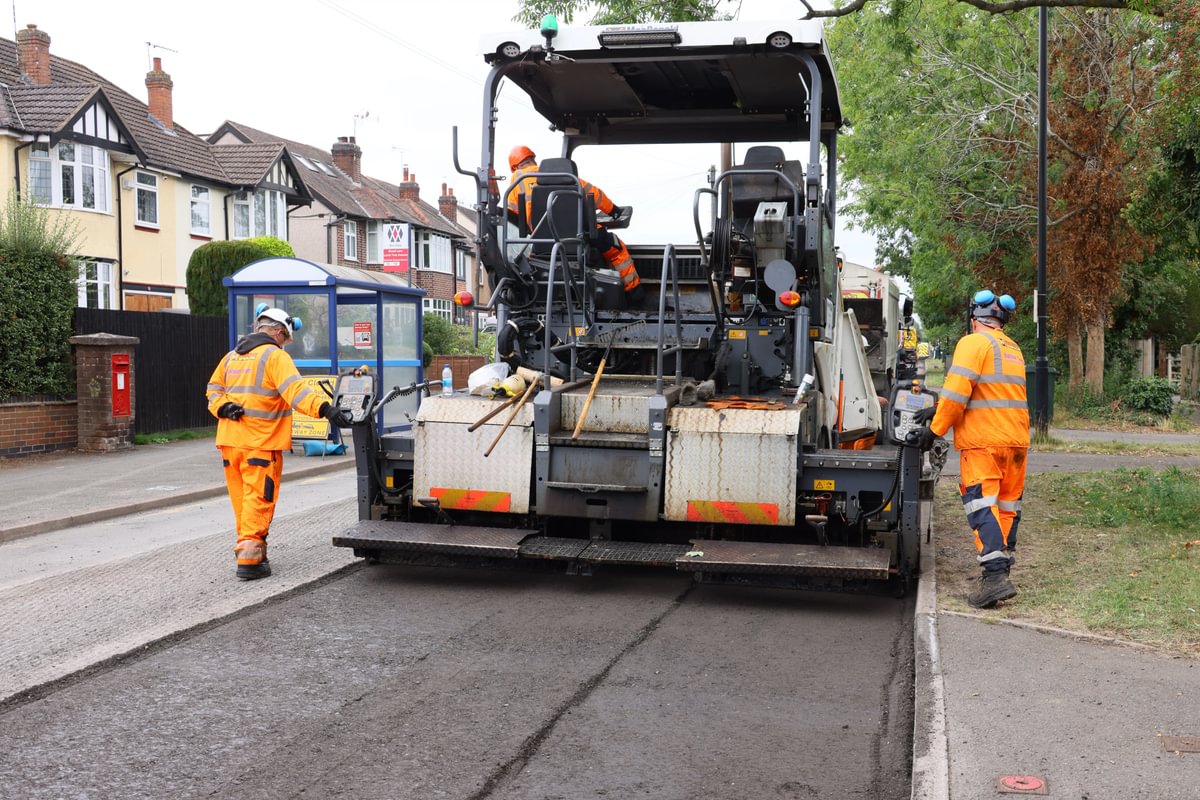
Foamix is compliant with the new Manual of Contract Documents for Highways Works (2025), which allows CRBM to be used in a wide variety of applications – from footways to heavily trafficked roads.
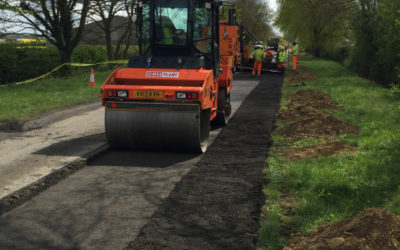
The solution was utilized in the reconstruction of Lavender Hill, a busy classified road in Enfield, London. The project used 1,440 tonnes of Foamix to provide a high-quality, durable basecourse for the road, which, 16 years later, continues to perform well under regular HGV and bus traffic.
Stuart Gready, director at OCL Regeneration, said: ‘I am delighted with the progress we have made since joining Holcim UK two years ago. We will continue to develop our network to accommodate the increasing demand for circular products in road infrastructure projects.
‘Through the innovation of sustainable solutions, such as Foamix, we are setting a new standard for environmentally conscious infrastructure, considering sustainability at every stage of its development, from its design to its application. Together with Holcim, we intend to ‘reconstruct’ the industry’s approach to road construction, with circular products being at the centre of new projects.’